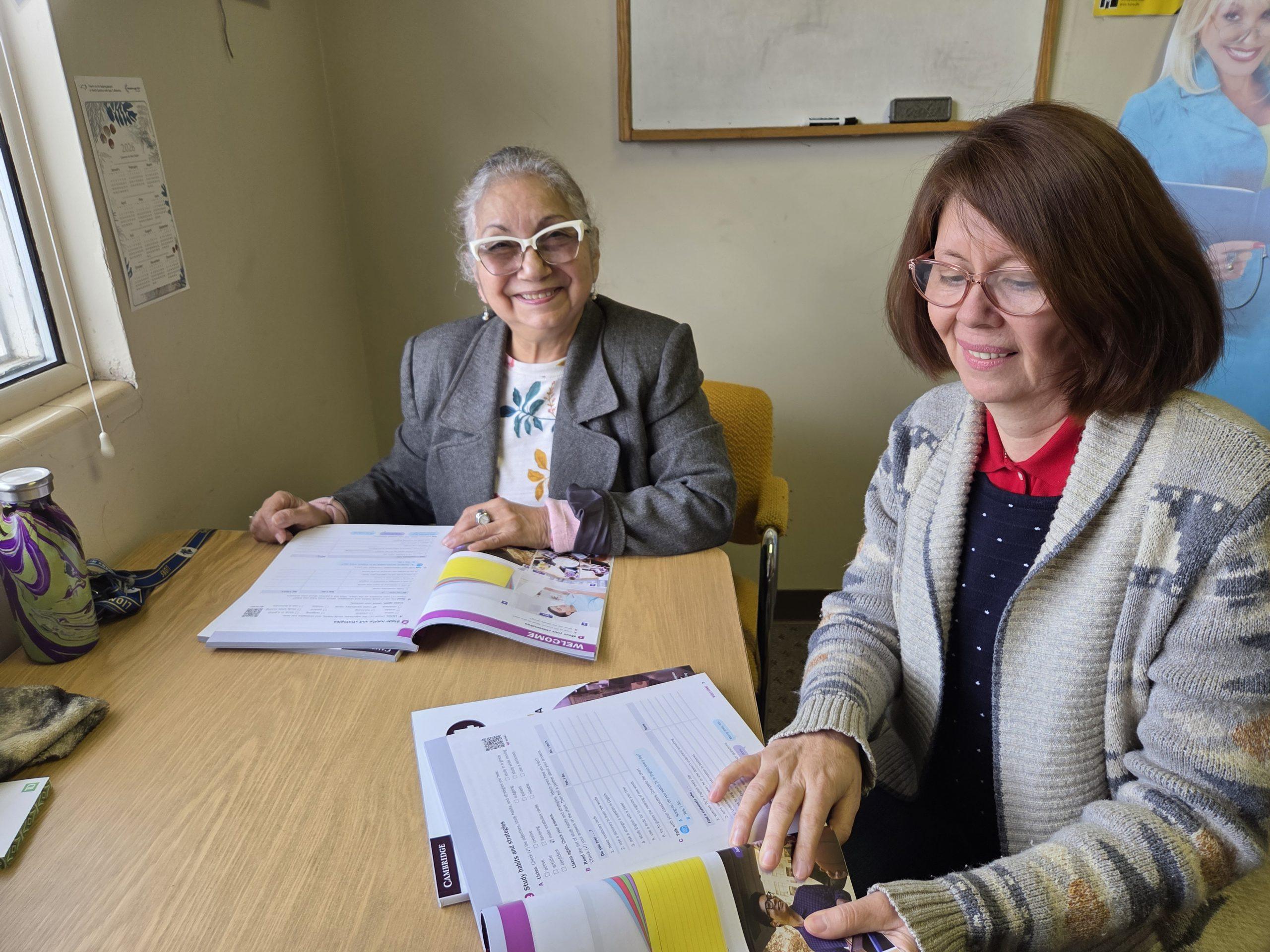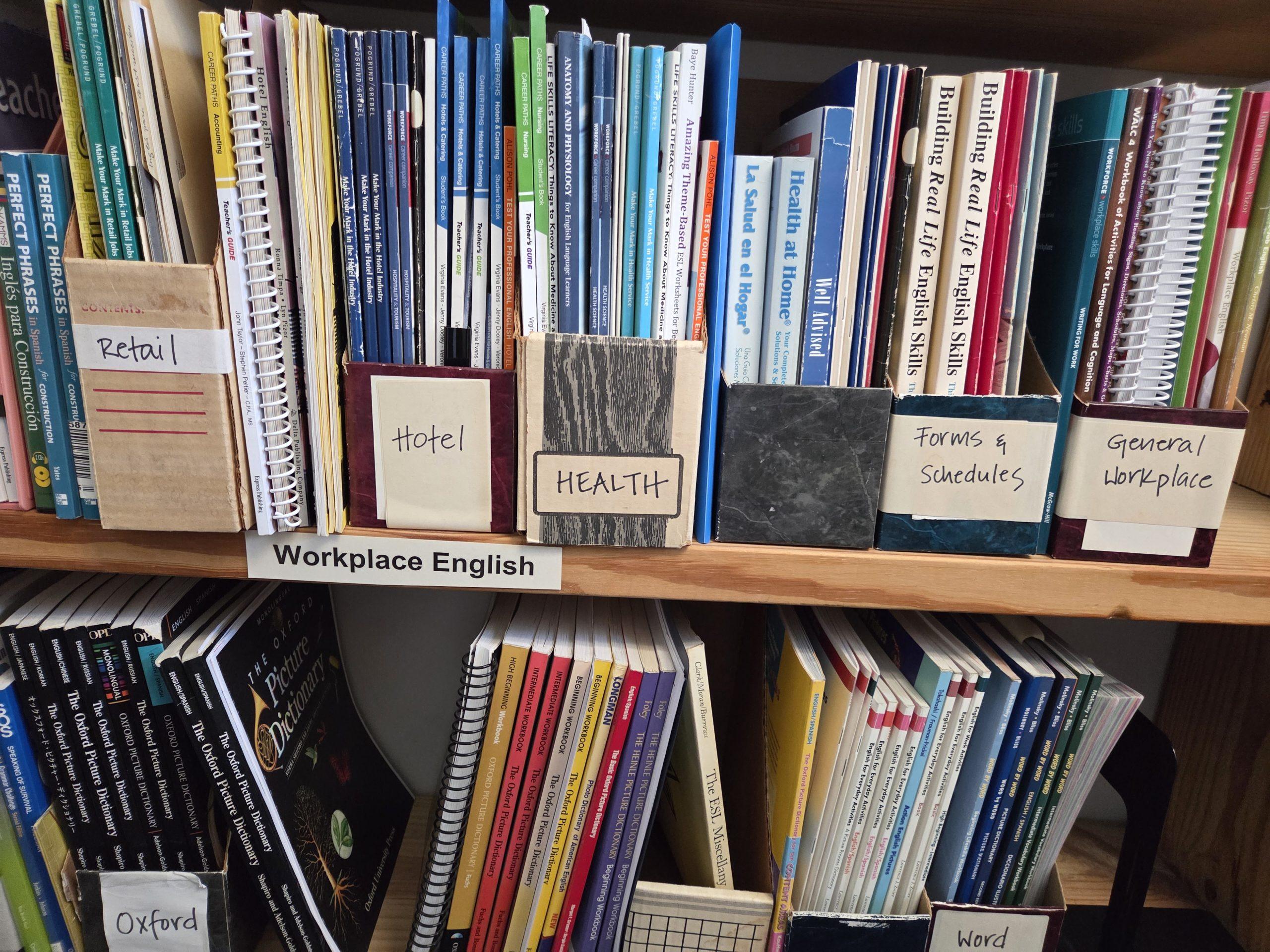
New volunteers often ask about the training they will get as they prepare to tutor their first student in our Adult Literacy or English for Speakers of Other Languages programs. All new tutors receive several hours of training (online or in-person) in research-based instructional methods and a curriculum tailored for the needs of our students. In addition to the curriculum materials provided for every student and teacher, we have a whole library of additional resources that tutors can check out for free.
Plus, many of our tutors find that supplementing the curriculum with real-life texts and tasks really motivates students because they can use their new skills to navigate real-life situations and challenges. Here are a few examples of authentic texts and tasks that empower students of all agees to read, write, and speak in their everyday lives.
Text messages. Send your (adult) student a text message or two during the week, and ask them to respond (not using AI or autotext). You can also use text exchanges with colleagues, friends, or a prospective employer. Then, in your tutoring session, review and correct any errors. Be sure to also celebrate their use of new vocabulary, as well as correct spelling and punctuation!
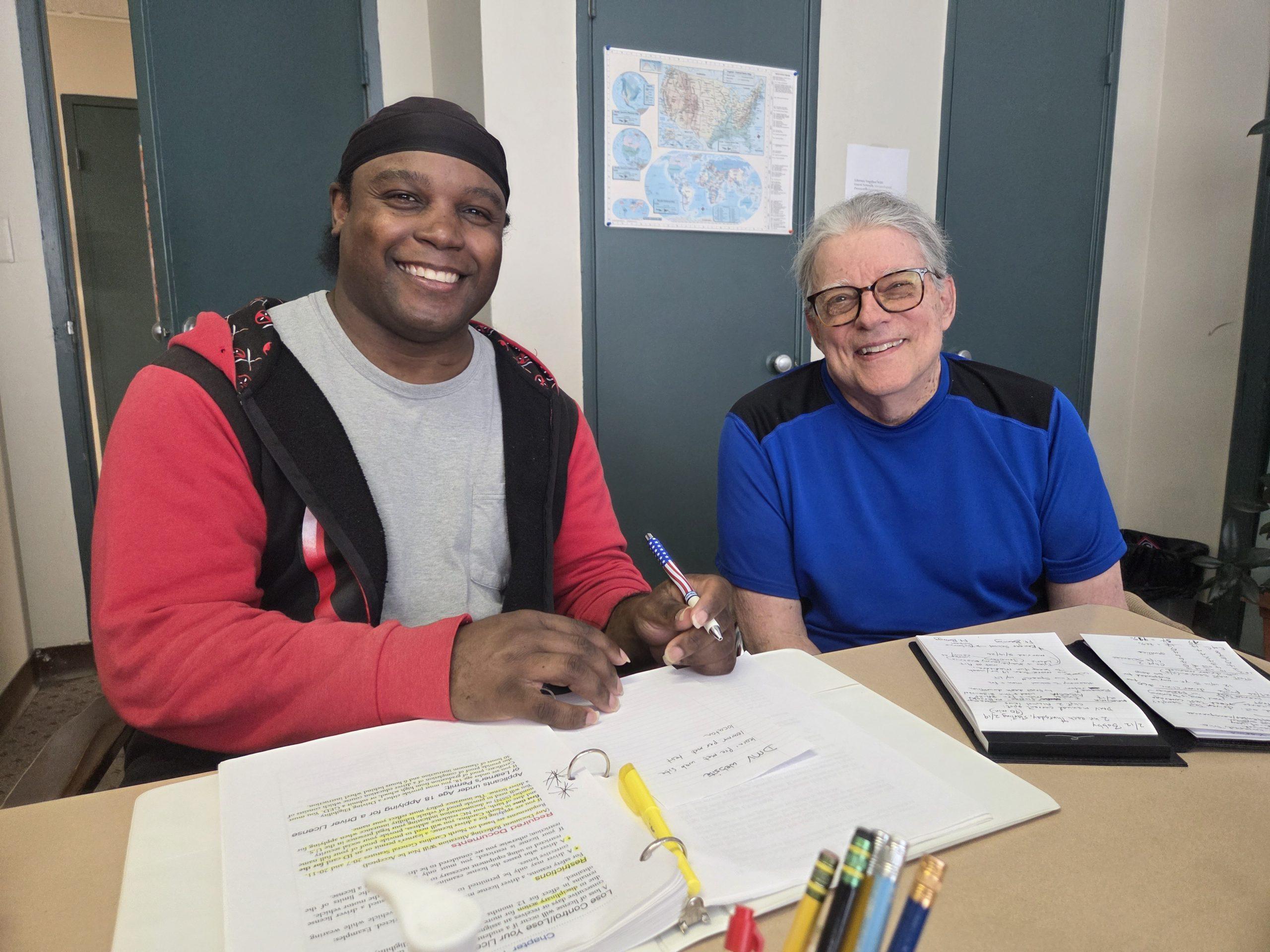
Domain-specific reading. Is your student enrolled in a community-college class, involved in a community group or church, or planning to take a driver’s test? Read the driver’s manual, course catalogue, or church bulletin in your tutoring session. This is a great way to teach specialized vocabulary (e.g., pedestrian, enrollment, fellowship) that students may not encounter in their text book, but will need and be able to practice in real-life situations outside of class.
Maps and diagrams. Everyone needs to be able to give and follow directions. Calvin Allen, who teaches a group ESOL class at Bounty and Soul in Swannanoa, really likes teaching a group class because there are many opportunities for students to interact with each other, and other languages, in ways that they would in real life. For homework, Calvin asked students to draw a map of a few downtown streets and label the buildings. Then, in class, students had to ask for and then give directions from one building to another using phrases like, “How do I get from the bank to the bakery?” or “To go to the grocery store, turn south on 1st Street, walk three blocks, then turn right on North 23rd Avenue.” Notice how this lesson had a built in head-scratcher. In many American cities, north, south, east, and west can be directions or names, so students had to figure out which one was correct on the map they were using.
Finally, Literacy Together program directors are always on the lookout for engaging real-world texts like News For You, an on-line news magazine designed specifically for adults who are learning English, and the True Stories series by Sandra Heyer.
Similarly, The Change Agent, a journal written by and for adult literacy learners, invites students to write their own true stories. “I love that the students are the writers, and in that sense, they are also the teachers! It’s a very empowering resource.” says Adult Literacy Program Director, Rebecca Massey.